Every designer who has been at this a while has lived through a few waves: the rise of social media, the explosion of mobile, each evolution of technology arriving with its own mix of hype and dread. Through all of them, one mantra has been my guiding light: design the world you want to live in. The people building digital products are also parents, patients, neighbours, and citizens. Whatever we launch into the wild, we have to want to live alongside it. That is the responsibility that comes with the privilege of building.
Our design team (and pretty much everyone who builds software today) is grappling with this right now. We are being asked to bring AI into the experiences we build while our own tools, workflows, and daily tasks shift under our feet. Some days it’s easy to meet this moment with curiosity. Some days it isn't.
In January, one of our designers wrote a long note to the rest of the team. She'd spent the holidays talking with her family about AI, and she described herself as a fence-sitter: someone who sees the good, the bad, and all the bits in between. The question she kept coming back to was what happens to our own thinking if we hand too much of it over to AI. Of everything the team shared with each other last year, that note got the biggest response.
I share that because people tend to assume everyone inside a software company is an AI cheerleader. We're not. The designers building AI into Jane are having the same dinner-table conversations you are. And honestly, that's who I want designing this: people who take the question seriously.
So rather than tell you AI is great, I want to show you how we actually work on it. For us, that has meant sitting with a few big questions, one at a time. Here they are, along with the decisions they led to.
Fear of AI is often about control
The first question was why AI makes people uneasy in the first place. One of our designers answered it better than any research report I've read: when AI does everything and you have no say in the outcome, you feel powerless. That's where the fear lives. We heard the same sentiment when the team surveyed and interviewed more than 400 of our customers this spring.
Designers feel a version of this too. Nobody on my team wants to hand the craft (or the fun) of designing an experience over to a machine. We believe human understanding, empathy, and taste are what make an experience good. Can AI help us iterate faster? Yes. But care and judgement still come from people, so we've built our own ways of working to use AI for what it's good at while leaving explicit room for the humans. The designer handcrafting an AI feature in Jane knows the same discomfort you may feel when AI starts changing the workflows in your practice. The skeptic's path deserves as much care as the enthusiast's.
That awareness runs through everything we design. Whenever AI writes something for you, suggests something to you, or changes something in your work, we hold it to three tests. You know when AI is involved. You get a say before something happens. And you can determine the final result.
The first test sounds obvious, but it's where some of our deepest design work is happening right now. How does AI announce itself? Should it have its own symbol in Jane? What should the interface do when AI is actively working on something, and what should it do when it isn't? We've spent entire meetings debating a single icon, or the way something moves on the screen, because those choices decide something that isn't small at all: whether you can glance at your screen and know what's AI and what isn't. You should never have to wonder.
The other two tests show up wherever AI drafts something that matters. A chart note, for example. You read the draft, change what needs changing, and sign it, and until you do, it isn't part of the record. The final call on what's written belongs to you. We'd never design it any other way.
Trust is built in small wins
Tens of thousands of practitioners already trust Jane with their schedules, their charts, and their patients' information. That trust is precious. It's hard to earn and quick to lose if we aren't thoughtful. So the next question was how to earn it for our AI features specifically.
In the spring, a group of our designers stepped away from day-to-day work for a week to study exactly that: how do people come to trust new technology, and how does that trust get broken? Two things stuck with me. You can't rush trust; it's earned through small wins sustained over time, not big promises. And people trust systems more when they understand the why. So let me explain a few of our decisions.
Recording is a good example. Jane never records unless you choose to start a recording, and if recording doesn't fit your practice, you can dictate a short summary after the session instead. When you do record, you can set the audio to delete automatically once your note is written. You adjust it to fit your workflow, not the other way around.
Two more decisions worth knowing about. And your data lives in your data center region. Both come from the same place: your patients trusted you with their information, you trusted us with it, and we don't treat that casually.
We also learned that people don't expect AI to be perfect. They expect to be able to catch its mistakes. AI drafts aren't always right, which is exactly why nothing in Jane is final until you've reviewed it and signed off. That step is there on purpose, and it's staying.
The right experience for the right moment
Then there's the question of where AI belongs in the arc of your day.
So much of clinic work is tacit. It lives in muscle memory, in workarounds, in the receptionist who knows that Tuesday's 2pm always runs late. You can't automate what you haven't taken the time to understand, which is why our designers still visit clinics and sit with practitioners and their teams. Actual people, in actual clinics, doing the actual work.
What we see there is that time with a client is fundamentally different from time spent on billing afterward, and AI should behave differently in each. When you're with a client, its job is to stay out of the way. Practitioners told us this so often it became a design requirement: stay in the background so I can stay focused on my client. So during a session, AI asks nothing of you. If you've chosen to record, it listens quietly, and nothing on the screen competes with the person in the room.
The rest of your work happens without a client present: finishing notes, tidying up the schedule, the admin side of running a practice. That's where AI steps forward and drafts things for you to review. Even there, we've been restrained on purpose. The bar we set for ourselves was "calm and steady, not hectic." We want these newer moments to feel like the Jane you already know. It's just Jane, doing more of the work you'd rather not do.
More time for the people in front of you
The last question is the biggest one: what's all of this for? When we asked practitioners what they wanted from better charting, we expected to hear about accuracy and speed, and we did. But the answer that stuck with me was different. They wanted help remembering the human details, like a client's new job, their kid's name, the trip they'd been nervous about. The small things that make a client feel seen.
That's what AI is for in Jane. Catching up on notes at the kitchen table eats your evenings, so AI drafts the note, you review and sign it, and you get that time back. And when the note captures those human details, you walk into the next session already caught up, ready to ask how the trip went. More time and better attention for the people in front of you. That's the goal, and it's the world we want to live in.
We haven't gotten every detail right, and we won't. Our designers still sit with practitioners and watch what works and what doesn't, and that work isn't slowing down. You'll notice AI showing up in more places in Jane over time, and when it does, you'll know what it went through to get there: the three tests, a why behind every decision, and a rule that it stays out of the way when you're with a client. None of it is accidental.
And the designer from January, the fence-sitter? She's still on the fence about plenty of things, and she's still designing AI at Jane. I think that's exactly right. You don't have to be all-in on AI to want it built carefully. If you have thoughts on how AI shows up in Jane, tell us. The best things we've built came from listening.
How we’re approaching AI at Jane
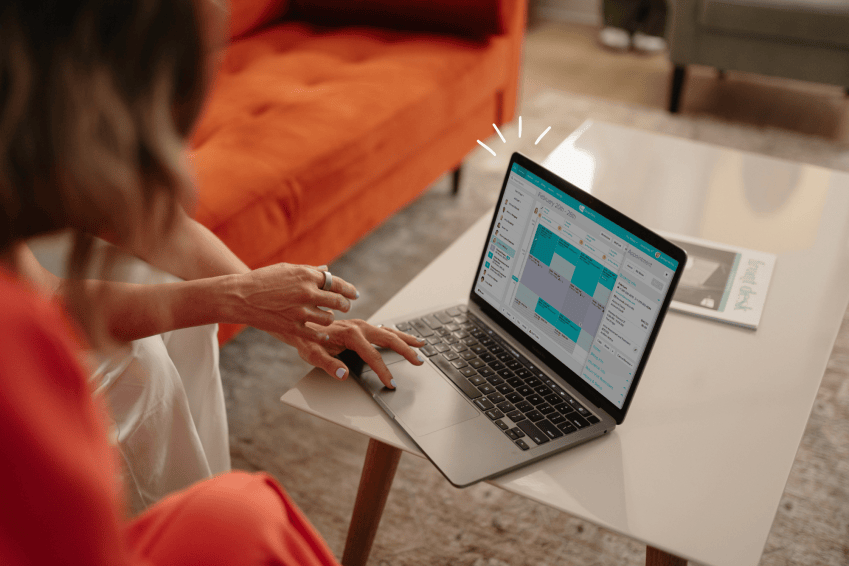
Our AI principles
Our AI principles explain how Jane builds AI features to support your clinical expertise: you’ll know which features use AI, and you decide what to accept, edit, or reject.
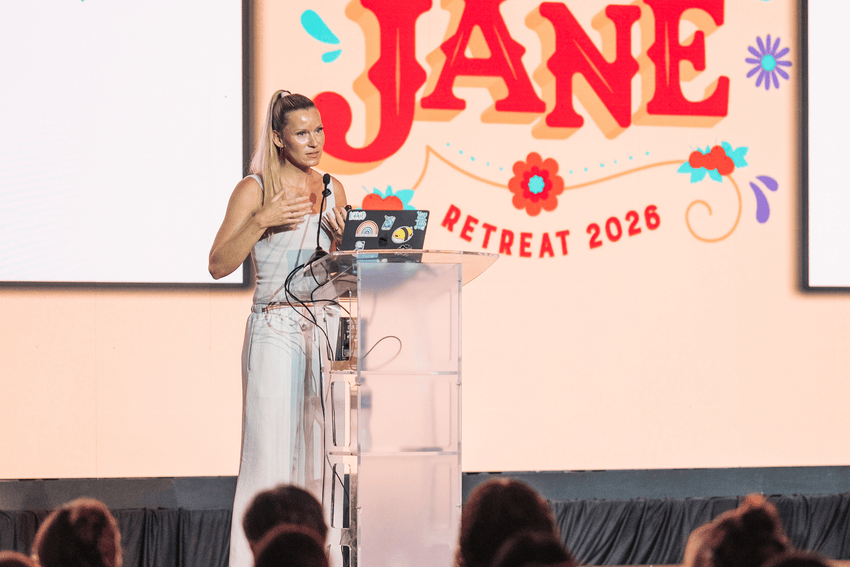
A letter from our Co-Founder
Our co-founder shares how Jane is approaching AI: building toward a practice assistant you can trust, one that’s safe, secure, and works the way your practice does.
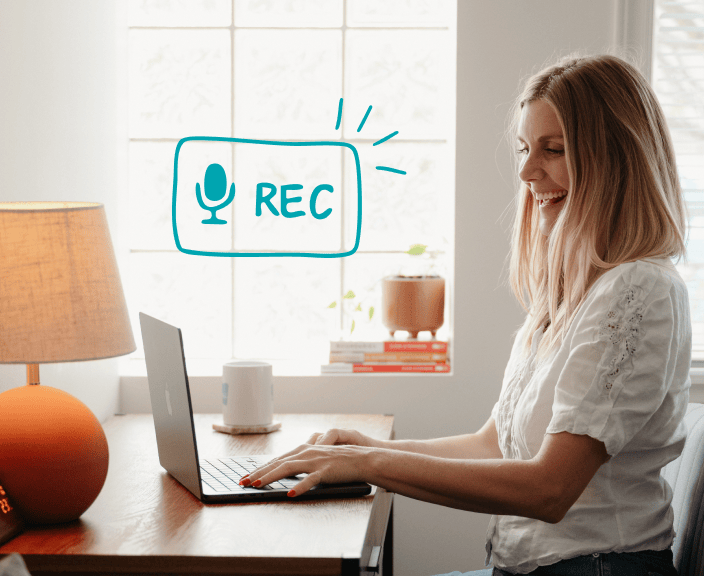
Discover Jane's AI Scribe feature
AI Scribe drafts your chart notes from a recorded session or your own dictation, right inside the templates you already use, and you review, edit, and sign off on every note.