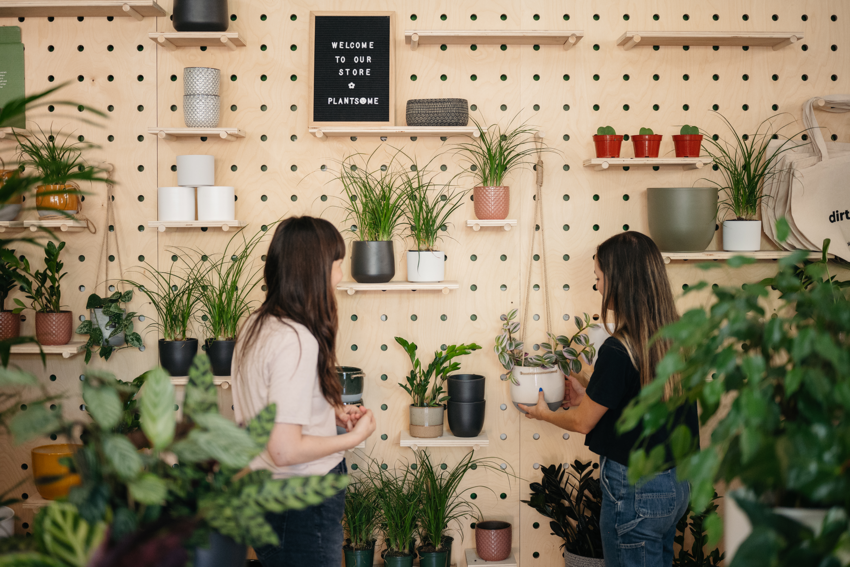
I travel to Plantsome on a sunny afternoon. Resident plant care specialist, Jacqueline Montone, shares her love for plants, admitting to having over 50 in her home.
I wonder what it’s like to care for more than just one small, plastic IKEA number, gifted to me at a recent housewarming. I think about the brown, crispy ferns I’ve overwatered (or underwatered?) that didn’t make it.
Is there hope for me to improve? Jacquie thinks so. She mentions the many benefits of adding plants to a space, like brightening mood, while adding color.
They can lower stress and even serve as a reminder to “take care of ourselves, take a deep breath, and appreciate the little things.”
She says that they provide a calm and relaxed atmosphere – I wonder who wouldn’t want that in a home office or clinic setting?
The best office plants (and how to care for them)
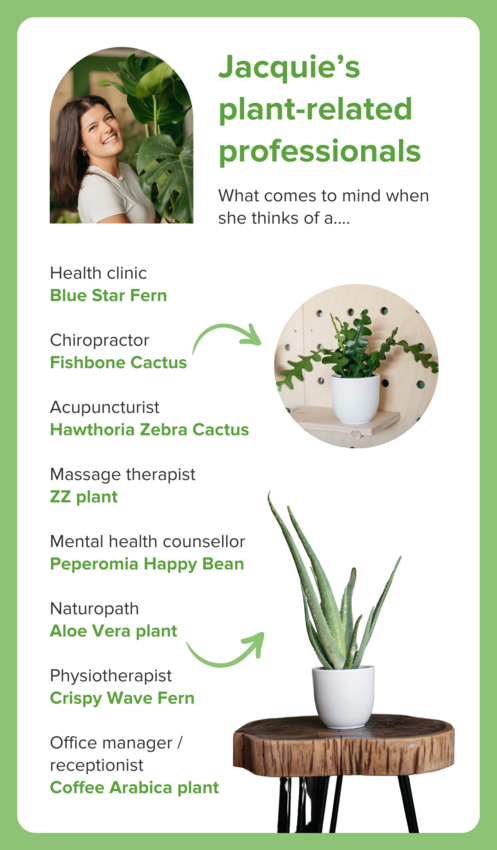
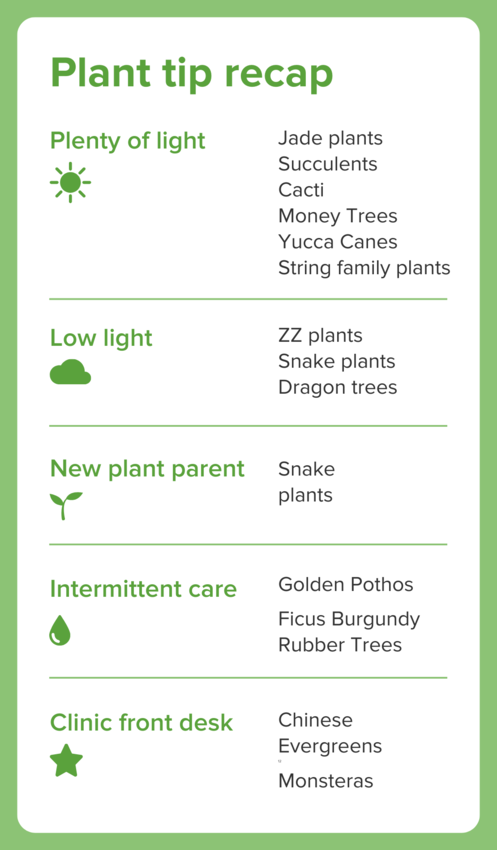
I hope being around the plants can relax me, too. I see the Chinese Evergreen on the far side of the room. It’s a beautiful, full plant, lined with pink on its leaves: one of Jacquie’s top choices for a welcoming front desk plant at your clinic.
Another choice is the ultra-trendy Monstera Deliciosa, famous for its large, uniquely shaped leaves. “They are an eye-catcher and give a lush, tropical vibe,” she comments.
When (and when not) to water the office plant
If, like me, you’ve had plant casualties and you worry about how much to water, Jacquie suggests investigating your plant’s soil to gauge when it’s time. “Poking your finger an inch or two deep to see the moisture levels is your best bet to avoid overwatering.
“If you’re a person who tends to forget watering sometimes – it happens – purchasing a self-watering pot can be a useful tool so your amigos never dry up,” she says.
Low-maintenance office plants
I ask about which plants are good for intermittent care – say you only work in a clinic a few times a week, run a hybrid practice, or shut down periodically? How do you choose a plant that isn’t afraid to fly solo for a bit?
Her suggestion for a low-maintenance leafy friend is a Golden Pothos or a Ficus Burgundy Rubber Tree. “These can tolerate periods of drought and enjoy their soil being dry before the next watering,” she says. “They also don’t need high light levels to thrive, making them a perfect addition to a clinic that may not be able to tend to them every day.”
Best office plants for low light
What if you have a dedicated treatment room that doesn’t have a window? Luckily, plants come with varying preferences. As if on cue, our photographer starts taking photos of the ZZ plant. It could star on The Real Housewives of Beverly Hills, because it’s one you can throw shade at. 😉
Included in Jacquie’s top picks for these darker spaces are Snake plants and the Dragon Tree. “Since they are shade-tolerant, they are a bit slower growing and very resilient. They can provide the stability and security one would potentially look for in a plant for a treatment room,” she says.
Office plants for natural light and temperature-controlled waiting rooms
On the lighter side of things, Jacquie has a ton of great options: She offers Jade plants, succulents, cacti, Money Trees, and Yucca Canes. She also recommends plants from the string family, such as String of Pearls, String of Dolphins, and String of Hearts.
Regardless of light, if you have a clinic that keeps treatment rooms particularly warm or cool, you should ensure your plant isn’t overly particular. “Some varieties just don’t agree with us even when we try our hardest!” says Jacquie.
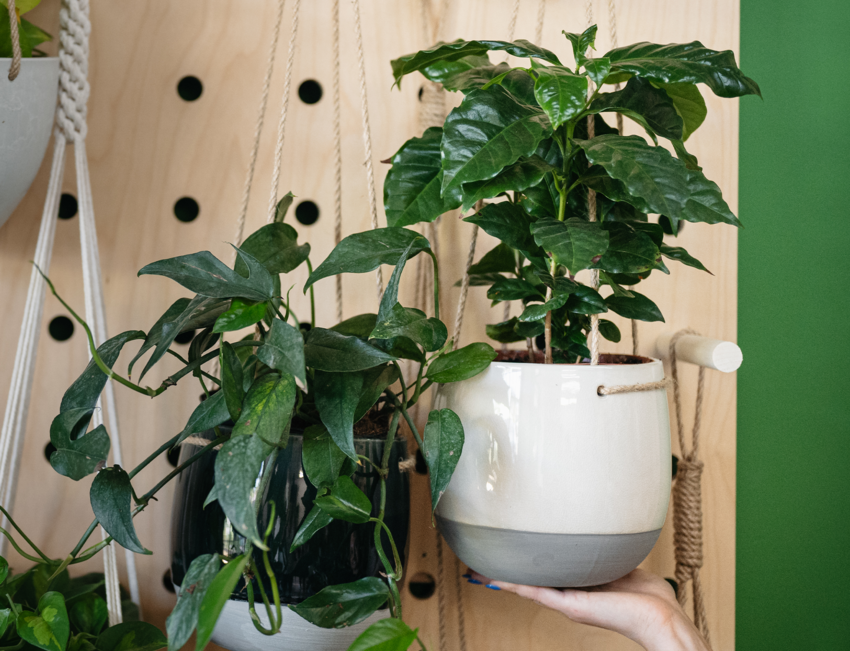
Low-care options vs. plastic plants
We wrap up the shoot and Jacquie offers me a small plant to take home. I’m torn – part of me wants it, part of me doesn’t. I’ve learned a lot, but am I ready?
While I flip back and forth, I recall a question I had asked Jacquie that is on some of our minds: “If you really can’t manage plants, are plastic ones ever acceptable?”
Jacquie suggests that folks “consider easy-going plants before going to plastic.” She points out that “part of the joy of owning plants is getting to reap the benefits of seeing them grow in your care. Plastic plants may give the look, but can’t replicate the satisfaction that you get from watching your real plant thrive.”
I decide to try my luck with the plant, a small Peperomia Hope, to see how I do with my newfound knowledge. I hope you will, too.
Want more tips to spruce up your clinic? 🪴
Sign up to our Front Desk print magazine, delivered right to your clinic!